Bedding · Pillow care
Wool Pillow Fill Explained: Loft, Temperature, and Everyday Care
A pillow is a small piece of architecture: it shapes the space between head, neck, and mattress, and quietly sets the tone for a night’s rest. Wool fill brings a particular mix of gentle resilience, adjustable height, and moisture management. Here is how to understand its feel, find a comfortable loft, and care for it without asking the fibers to do more than they should.
Published October 21, 2026
What makes a wool pillow feel different?
Wool is a natural fiber with a springy, crimped structure. In a pillow, that structure creates a fill that can feel yielding without being entirely flat or inert. Rather than behaving like a single molded block, wool fibers form a soft, compressible mass. The precise sensation depends on how much fill is inside, how it is arranged, the pillow’s construction, and the sleeper’s preferred position.
That distinction matters because “soft” and “supportive” are not opposites. A pillow may feel gentle at the surface while still offering enough resistance to help keep the head from sinking too far. Wool’s appeal often lies in this balanced, natural hand: cushioned, breathable, and subtly resilient. It is not necessarily the right texture for everyone, but it can suit sleepers who want a fill that feels less uniform than a solid foam core and more substantial than a loose, very light stuffing.
Wool also has a relationship with moisture and warmth that contributes to its reputation as a comfortable bedding fiber. It can absorb moisture vapor and release it over time, helping moderate the damp, clammy feeling that some sleepers notice in a warm sleep environment. That is not the same as actively cooling the body, and no pillow can control room temperature or individual heat production. Rather, wool’s fiber properties may help create a more balanced-feeling microclimate around the head.
As with any fill, the experience is personal. Room conditions, pillowcase fabric, mattress firmness, sleepwear, and individual temperature preferences all influence how a pillow feels through the night. A wool pillow is best understood as one component in a broader sleep setup—not a shortcut to a particular sleep outcome.
Loft: the height that supports your sleep position
Loft describes a pillow’s height, especially once a head rests on it. The number on a product label can be less useful than the way the pillow behaves under your weight. A lofty pillow may compress considerably; a seemingly modest one may hold its shape more firmly. With wool, fill quantity and distribution are central to the result, and an adjustable design gives sleepers the option to refine the height rather than accept a fixed profile.
The aim is a comfortable, relatively neutral relationship between head and spine. When lying on your side, the pillow generally needs to fill the space between the shoulder and head without tipping the head sharply upward or letting it drop toward the mattress. That space varies with shoulder width, body shape, mattress softness, and the way a person naturally settles into bed. A side sleeper on a plush mattress, for example, may need a different effective loft from someone with similar proportions on a firmer surface.
Back sleepers often prefer enough lift to support the natural curve of the neck without pushing the chin toward the chest. Stomach sleepers typically need a lower, softer profile to avoid placing the neck in an exaggerated turn. These are useful starting points, not rules: comfort, mobility, health needs, and established sleep habits differ from person to person. If a pillow consistently leaves you uncomfortable, or you have persistent pain, consider seeking advice from a qualified health professional rather than trying to solve the problem through bedding alone.
Adjustability can make wool particularly practical when the ideal height is uncertain. Removing a little fill may lower the pillow; adding fill back can restore some lift. It is usually wise to make changes gradually, then spend several nights assessing the result. A single adjustment can feel unfamiliar at first, while repeated large changes make it difficult to identify what is working.
Pay attention to what happens after you lie down. Does your head feel level and relaxed? Is there a sense of strain through the neck or shoulder? Does the pillow stay comfortable when you change position? These observations are more useful than chasing an abstract idea of the “perfect” loft. The best height is the one that feels supportive in your ordinary sleeping posture and remains comfortable over time.
Temperature and moisture: a quieter kind of comfort
Temperature regulation is often discussed as if a pillow can make a sleeper cool on command. In reality, comfort is a conversation among fiber, fabric, airflow, room climate, and the body. Wool is valued for its ability to take up and release moisture vapor, a feature that can help reduce the sensation of dampness. Its insulating character can also feel cozy, which some people appreciate in a cool room and others may find too warm, depending on their needs.
In a wool pillow, the cover matters as much as the fill. Cotton is a familiar, breathable textile, but different weaves and finishes create different sensations against the skin. Some pillows offer more than one cover surface, allowing a sleeper to choose between textures. That option may be useful when preferences shift with the season or when one side feels more comfortable than the other. It does not change the fundamental temperature of the room, but it can alter the pillow’s immediate feel.
Keep the wider sleep environment in view. A breathable pillowcase, appropriate bedding layers, and a bedroom that feels comfortable to you can work together more effectively than expecting one material to compensate for everything else. If you wake feeling overheated, consider whether the room, duvet, sleepwear, or other bedding layers might be contributing. Conversely, someone who is often chilly may appreciate the gentle warmth of natural fibers.
Claims about a fiber’s natural properties should also be kept in proportion. Wool is not a medical treatment, and choosing a wool pillow cannot guarantee better sleep, prevent allergies, or resolve temperature-related symptoms. People with known sensitivities should review product materials carefully and make choices in line with their own needs.
An example of adjustable wool fill: the Obasan pillow
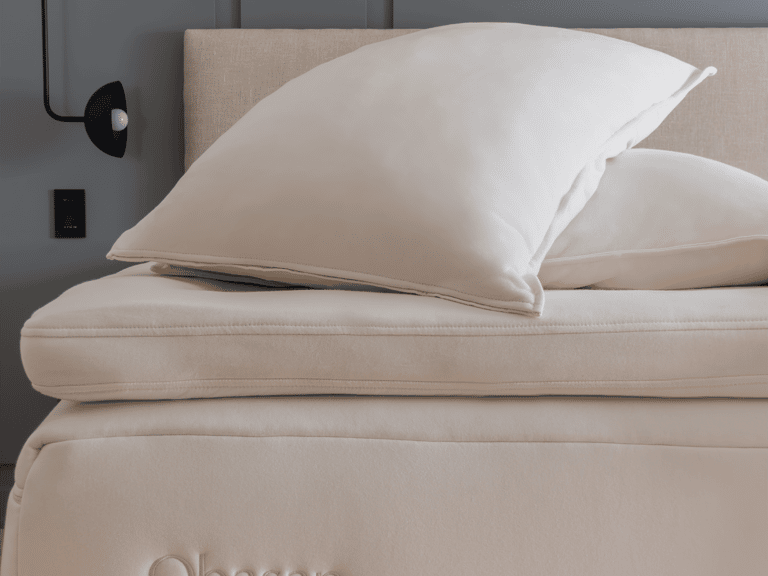
The Obasan Organic Wool Pillow illustrates how material and adjustability can meet in a single design. Its fill is described as 100% organic wool knops, and the pillow has a zippered core that allows wool to be removed or added to adjust loft. The product information characterizes it as one of Obasan’s firmer pillows and suggests it for stomach and side sleepers; those descriptions are a starting point, not a guarantee of individual comfort.
Its cover has two different sides: silky organic cotton on one and soft cotton jersey on the other. Turning the pillow can change the surface against the face and may make it easier to choose a feel that suits the moment. The pillow is available in several listed sizes, so it is worth checking the dimensions and matching the size to your pillowcase before deciding.
Adjusting a wool pillow can be a hands-on process. The manufacturer notes that loose fill may become messy while the core is open and recommends making changes over a sink with a drain plug or outside. A large, clean work surface is also useful. Remove a modest amount, close the core, and test the pillow before deciding whether it needs another adjustment. Keep any unused fill clean and contained if you plan to use it later.
Product details, dimensions, materials, care directions, and warranty terms can change. Review the current listing and instructions that accompany the pillow before use. In particular, treat the care label and manufacturer guidance as the authority for that specific construction.
Everyday care: protect the core, refresh the surface
Wool pillows are not usually cared for like a cotton sheet. The fill can be sensitive to the conditions of washing, and the Obasan care instructions specifically say not to wash the wool core. Water, agitation, and unsuitable drying can alter the fill or make it difficult to restore its original feel. The simple principle is to keep the core protected and clean the parts designed to be washed.
A pillowcase is the first line of defense against skin oils, hair products, and everyday dust. Use one that fits without compressing the pillow excessively, and launder it according to its own care label. For the Obasan pillow, the listed guidance is to wash the pillowcase in cold water and hang it to dry; check the current product instructions before laundering, since textiles can shrink if handled incorrectly.
Seasonal airing can help a pillow feel fresher. Remove the pillowcase and place the pillow in a clean, dry, well-ventilated area, away from rain and direct exposure that could damage the cover or fibers. Airing is not a substitute for cleaning a soiled pillow, but it is a low-effort way to let accumulated odors dissipate. Follow the manufacturer’s directions if the pillow has become wet or needs more substantial attention.
For odors, Obasan’s instructions suggest sprinkling baking soda on the pillow. Use care: apply only as directed, keep powder away from the open core and any areas where residue could be difficult to remove, and make sure it is thoroughly cleared before replacing the case. If you are uncertain about a cleaning method, check with the manufacturer rather than experimenting with steam, soaking, strong cleaners, or a washing machine.
The product guidance also describes placing the pillow in a dryer with two tennis balls on the air or coolest setting to increase loft. This is a specific instruction for that pillow, not a universal rule for all wool fills. Before using a dryer, confirm that the current label permits it and follow the stated settings. High heat is not a sensible shortcut for refreshing delicate bedding.
Small habits make a meaningful difference: keep the pillow covered, avoid eating or applying products directly over it, and let it breathe when changing linens. If the pillow’s feel changes, first consider whether the fill has shifted or compressed and whether a careful loft adjustment is appropriate. Do not open the core simply as a routine maintenance step; adjust only when the height needs attention.
Wool compared with other common pillow fills
Choosing a pillow is less about identifying a universally superior material than finding the qualities you value. Compared with a molded latex pillow, wool fill is generally more malleable and can be adjusted in designs with an accessible core. Latex, by contrast, tends to have a more consistent, buoyant shape. A person who wants stable contouring may prefer latex; someone drawn to natural fibers and tunable fill may be more interested in wool.
Down and down-alternative pillows often feel softer and more compressible, though their support and recovery depend on construction and fill quantity. Wool may feel more structured or resilient to some sleepers, but descriptions like “firm” remain relative. A pillow’s actual feel is shaped by its cover, amount of fill, and how it compresses under the head—not simply by the name of the material.
Memory foam is known for a slower, more molded response in many designs. It can provide a different sort of contouring from loose wool fill, and its shape may be less easily adjusted. Each material also comes with its own care requirements. Read the instructions for the exact pillow you are considering, since materials that sound similar can have different constructions and cleaning limitations.
When comparing options, ask practical questions: Can the loft be changed? Is the cover removable? What parts can be washed? Does the pillow feel comfortable in your usual position? Are the stated materials suitable for your preferences and sensitivities? These questions are more revealing than relying on a single label such as “natural,” “cooling,” or “supportive.”
A thoughtful way to choose
Start with your sleep position, but do not stop there. Consider shoulder width, mattress softness, whether you move between positions, and how much support you like under your head. If possible, try a pillow in a way that reflects how you actually sleep, rather than judging it while sitting upright. Give yourself time to notice its feel, and be realistic about return policies and hygiene requirements before purchasing.
For an adjustable wool pillow, begin near the supplied fill level and make small changes. A pillow that feels too high may need less fill; one that collapses too far may need more. Keep a note of each adjustment so you can reverse course if needed. Because the fill can be messy when exposed, prepare the space before unzipping the core and avoid making changes near open drains or upholstery.
It is also worth considering who will use the pillow. Adult pillows are not interchangeable with infant sleep products. For babies and young children, follow current safe-sleep guidance from recognized health authorities and use only sleep products intended for the child’s age and setting. A pillow designed for adults should not be treated as a nursery sleep surface.
Frequently asked questions
Does wool make a pillow feel hot?
Not necessarily. Wool’s moisture-handling properties may help the sleep surface feel less clammy, while its insulating character can feel warm to some people. Your experience will depend on the room, pillowcase, bedding, and personal temperature preference. If you tend to sleep hot, consider the whole bedding setup rather than judging the fill in isolation.
Can I wash a wool pillow?
Care varies by construction. For the Obasan Organic Wool Pillow, the supplied guidance says not to wash the wool core. Protect it with a pillowcase, air it seasonally, and follow the manufacturer’s instructions for any cleaning. Do not assume that a method suitable for a removable cover is safe for the fill.
How often should I adjust the loft?
There is no fixed schedule. Adjust only when the pillow’s height or feel is no longer comfortable. Make small changes and allow time to evaluate them. Frequent adjustments can make it harder to identify a useful configuration.
Is wool a good choice for every sleeping position?
It can work for different preferences, especially when the fill is adjustable, but no material suits everyone. The right loft depends on position, body proportions, mattress feel, and personal comfort. A product’s suggested position is helpful context, not a substitute for trying the pillow thoughtfully.
The lasting appeal of a considered pillow
Wool fill offers a particular kind of everyday luxury: not spectacle, but a quiet combination of texture, resilience, and thoughtful function. Its loft can be adjusted in some designs, its moisture management may contribute to a more balanced feel, and its care rewards a light touch. The trade-off is that wool asks for a little more understanding than a pillow that can simply be tossed into the wash.
Choose with your sleep position and preferences in mind, keep expectations grounded, and follow the care instructions for the exact product. With those details in place, a wool pillow can become a considered part of a restful bedroom—one that feels personal, comfortable, and made to serve the routines of everyday life.